In the 40th year of the Åke Blomström Award we received almost 40 entries from 14 countries. The five members of our international jury listened to and reviewed all of them. Here are the candidates awarded a scholarship for the Åke Blomström Masterclass 2026 in Berlin:
Aoife O'Neill, Ireland Elisa Longo, Italy Indrė Krivickaitė, Lithuania Jamie Reinert, Luxembourg Leo Rehnfeldt, Sweden Mees Warmerdam, Netherlands Michał Matus, Poland Ronja Morgenthaler, Germany Victorie Kralko, Czech Republic Alicja Głów, Poland (she could not attend in 2025)
Congratulations to all! We see you on 10 and 11 October at Prix Europa in Berlin.
Erin Anderson is a writer, audio producer, and documentary artist based in Pittsburgh, Pennsylvania (USA). She is co-creator and producer of Cement City, named one of The New York Times top ten “Best Podcasts of 2024,” and an ASME National Magazine Award Finalist. She teaches narrative audio and nonfiction in the Writing Program and the Film and Media Studies Program at the University of Pittsburgh.
Podcast: Cement City
Cement City is an independently produced ten-episode series about day-to-day life in a forgotten former steel town. Donora, Pennsylvania is home to 4,650 people. It has no schools, no banks, no grocery stores, no gas stations. It has a Smog Museum and a mayor named Piglet. The series follows Erin and her collaborator, magazine journalist Jeanne Marie Laskas, as they stumble off the highway into this town they’ve never heard of, buy a house there, and stay for three years. Cement City offers a case study in long-form immersive documentary: the ethics of embedding in a community over time; the challenge of balancing narrative drive with patient, immersive scene-building; and the art of making a forgotten place matter to a listener who has never heard of it and has no reason to care.
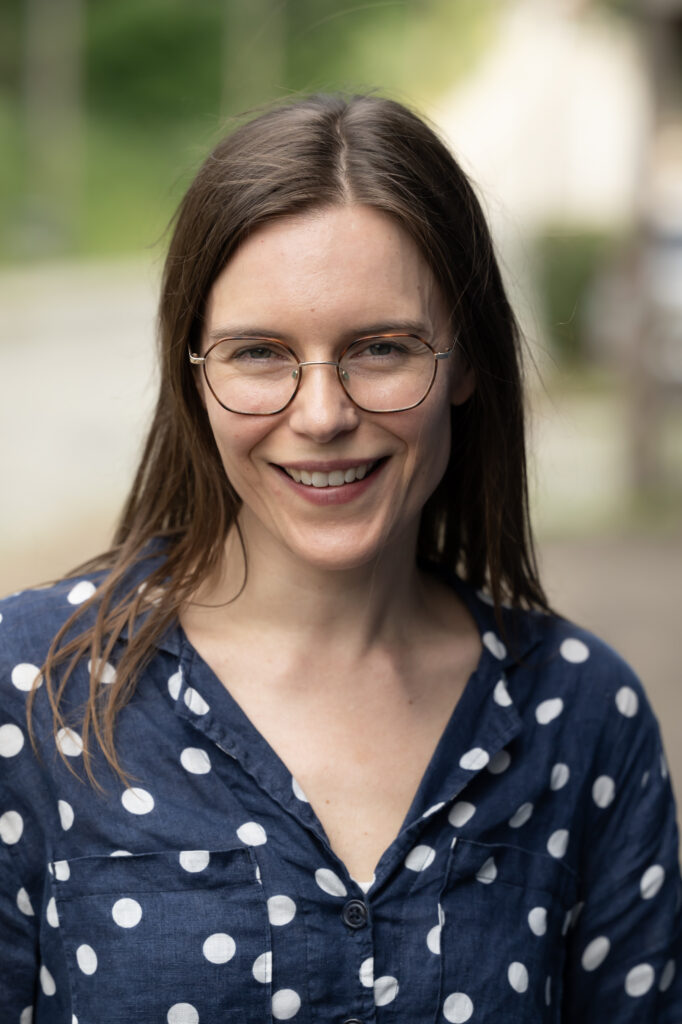
Franziska Sophie Dorau, Austria
Foto: private
Franziska Sophie Dorau, born in Vienna, is an author and director of audio-documentaries. After studying Comparative Literature in Vienna and Paris, she started to work as a radio journalist for the Austrian national broadcast´s cultural and informational channel Ö1. She focuses primarily on socio-political issues, as well as portraits of authors and artists. Her documentaries have been nominated for numerous international awards. Among others, she has received the Prix Europa (2012), the CIVIS Media Award (2020), and the Premio Ondas (2024). In 2024, she was awarded the Axel Eggebrecht Award by the Leipzig Media Foundation for her complete body of work. She recently worked as a dramaturgical consultant for the Berlin based film production company “Komplizen Film”. She lives in Berlin.
Documentary: We Are at War. The Rehearsal Is Cancelled. Kyiv´s Symphony Orchestra in Search of a Second Home.
In April 2022, the renowned Kyiv Symphony Orchestra sets off on a tour to Western Europe. This trip is different from the usual tours. Two months earlier, Putin's army had invaded Ukraine; a brutal attack - also on the country's culture. The orchestra members' mission is to promote and defend their culture in Europe. But it soon becomes clear that they will not be able to return to their homeland. The journey becomes an exile. Through a chain of coincidences, the orchestra ends up in Gera, Thuringia. The city provides them with living quarters and a rehearsal room, and the Berlin Philharmonic takes over the patronage. The musicians from Ukraine can initially breathe a sigh of relief. From Gera, they travel to the most important concert halls in Europe and celebrate successes. But in May 2023, Kyiv cancels the funding. And the Jobcenter in Gera is putting more and more pressure on the musicians to accept job offers from German orchestras or music schools. The Kyiv Symphony Orchestra is threatened with dissolution. For the male musicians, this would mean a return to Ukraine, where they could be drafted into the war. When this scenario almost becomes reality, an unexpected offer arrives that sheds new light on their future. In her moving documentary, Franziska Sophie Dorau tells of the unwavering strength and passion of an orchestra that fights for its music and cultural heritage against all odds.
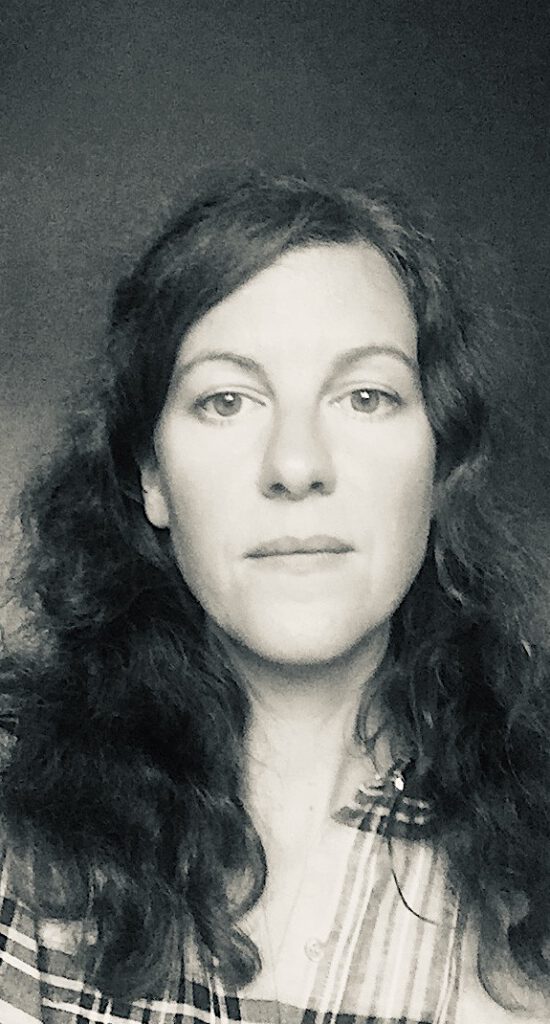
Saška Rakef, Slovenia
Foto: Adrijan Pregelj
Saška Rakef is a playwright and directress. She is interested in the influence of emancipated musical composition on the method and aesthetics of directing. She researches sensorial language, a physical experience invoked by sound including the sonority of words, the staging methods translating the principles of musical composition into directing and dramaturgy procedures, and the writing processes of contemporary text for radio and theatre. An important part of her creativity is content for babies and infants. She was a project leader of the B-AIR project consortium, exploring how people and the surrounding world conceptualize and experience sound; connecting artistic, scientific and journalistic methods of research and creation. She works as a radio director at Radio Slovenia. She teaches radio play and radio directing at the Academy of Theatre, Radio, Film and Television, Ljubljana. A variety of domestic and foreign festivals have showcased her work, for which she has received several nominations and awards (Prix Italia Special Mention, Branislav B Cubrilović Award, Second Prize at Prix Marulić, nominations for Prix Europa, Palma Ars Acustica and more).
Documentary: Journey at The Edge of The Night
Dr Evgen Bavčar has a special ritual. For over forty years, he has been recording the nightingale singing on May nights in his hometown of Lokavec. Under the nocturnal cloak, in duet with the nightingale, the story unfolds into a narrative of the nightingales' blinding so they shall sing in perpetuity – a reflection on blindness as social castration, on existential proximities and distances, the position of the blind throughout time and the question: why should the pleasure of the night not be equal to the pleasure of the day? The night journey to the break of day raises profound questions about human existence, differences, the environment, freedom, intimate desire for duality, the Sun and a new spring.
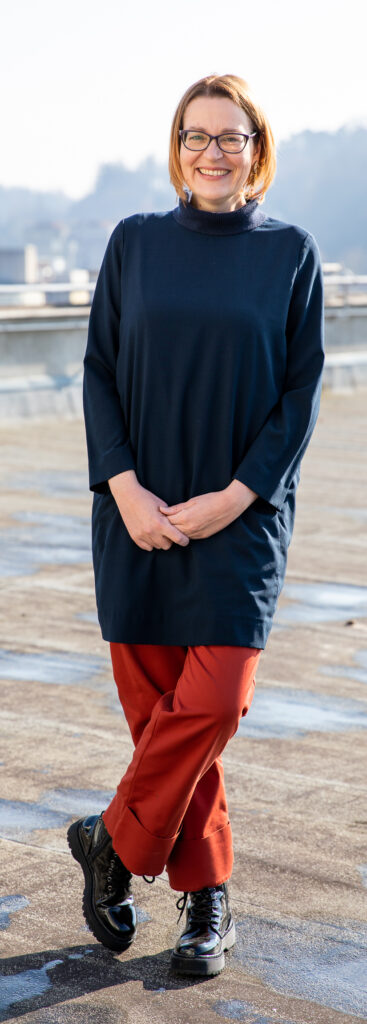
Xavier Yvon, France
Foto: Radio France
Xavier Yvon is an experienced journalist and audio editor with a career spanning major French newsrooms. He currently leads the Reportages Department at France Inter, overseeing national and international coverage. Previously, he served as Editor‑in‑Chief for Podcasts at L’Express, where he created and hosted La Loupe, a daily deep‑dive news podcast. From 2016 to 2020, he was Europe 1’s US Correspondent in New York. His original audio work includes acclaimed series such as Taylor Swift, le monde, ma fille et moi and Les Petites Voix. He has been recognized with major awards including the Prix Europa Special Jury Mention, the Prix Varenne, and the Bayeux War Correspondents Prize.
Podcast: Taylor Swift, the World, My Daughter and I
A dad wants to know : how could his 13-year-old daughter succumb to the Taylor Swift frenzy, like hundreds of millions of fans around the world ? To understand, he goes with her to a concert, and then decides to take her on a road trip following the star’s footsteps. From Nashville to Washington, via her native Pennsylvania, they travel through Taylor Swift’s universe, meeting fans, musicians and even a Harvard professor. Above the phenomenon, the sweety conversation between two generations helps us understand the world in which our teenagers are growing up.
Grant available for a two-day training event for Europe’s audio talent by Europe’s best audio documentary makers.
Apply now for a scholarship to the Åke Blomström Masterclass delivered at the start of this year’s PRIX EUROPA (10 & 11 October 2026) in Berlin.
During the two-day Masterclass you will have the unique opportunity to learn from European award winning documentary makers, to glean their secrets and get their advice.
If you have gathered your first steps in documentary audio, this is your opportunity to pitch your ideas and projects and become part of a network of future feature makers all around Europe. All participants will receive an Åke Blomström Masterclass Certificate.
To be eligible for one of ten scholarships, submit
a max. 5-minute edited audio production demonstrating the creative use of audio (with English translation as pdf or subtitle video)
a CV,
a covering letter outlining why you wish to attend the Åke Blomström Masterclass
a sketch (max. 1 page) of a documentary project in audio that you might like to pitch there.
The scholarship includes a travel allowance of 500 euros. Please send your application by 13 July 2026 to audio@prixeuropa.eu.
On 17 August we will publish the winners here and at PRIX EUROPA website and you’ll find out if your application was successful.
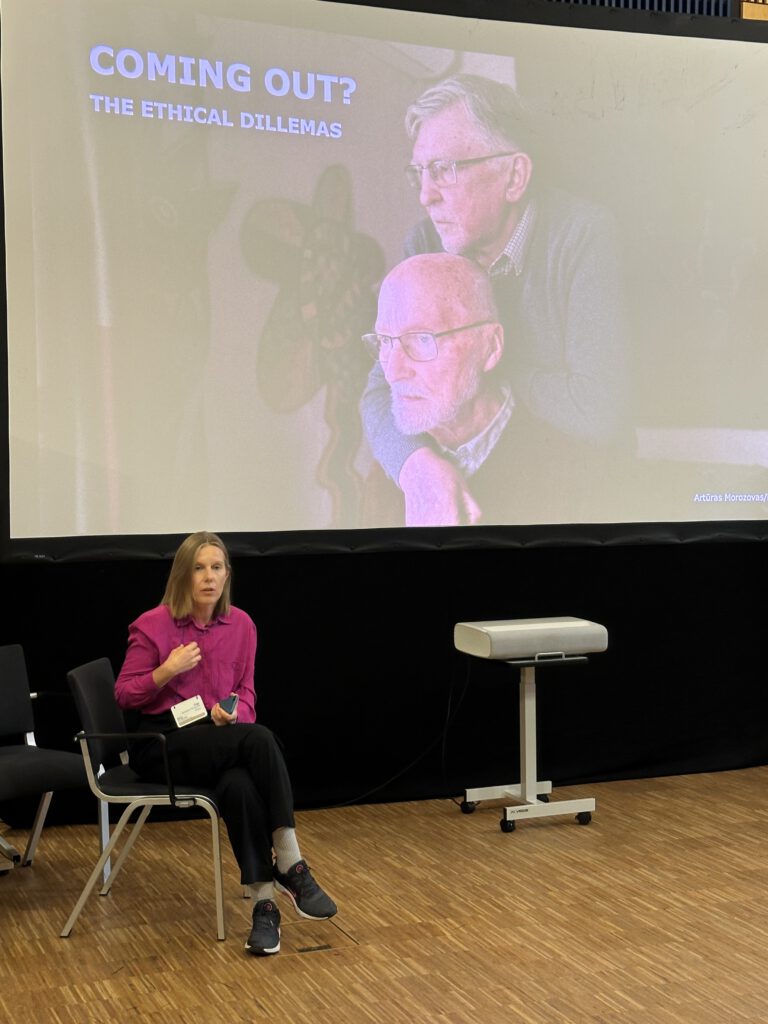
Naturally, I was overjoyed when I learned that the project outline I had submitted had been accepted, meaning I could take part in the masterclass. On the train to Berlin, I listen to Coming Out by Inga Janiulytė-Temporin as preparation, a piece awarded the Prix Europa as the European Audio Documentary of Year 2024. It tells the story of an older gay couple living in socially conservative Lithuania. The protagonist’s warm, unguarded voice fills my ears. “Hurray-hurray-hurray-hurray, huu-rray!”, he sings a little hymn about the love for his partner. Only a few minutes into the radio documentary I find myself stunned: an extraordinarily accomplished work of radio, intimate without lapsing into voyeurism, grippingly told, yet restrained and elegant in its form. Inga Janiulytė-Temporin is one of four radio producers who will present their pieces to the attendees of the masterclass and speak about the craft behind them.
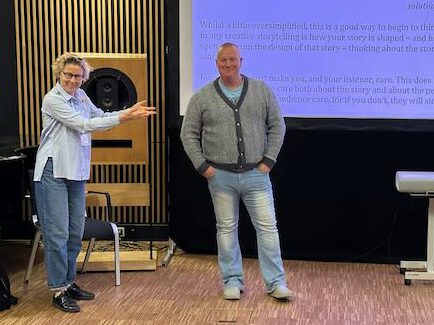
Agnieszka Czyżewska-Jacquemet and Liam O'Brien
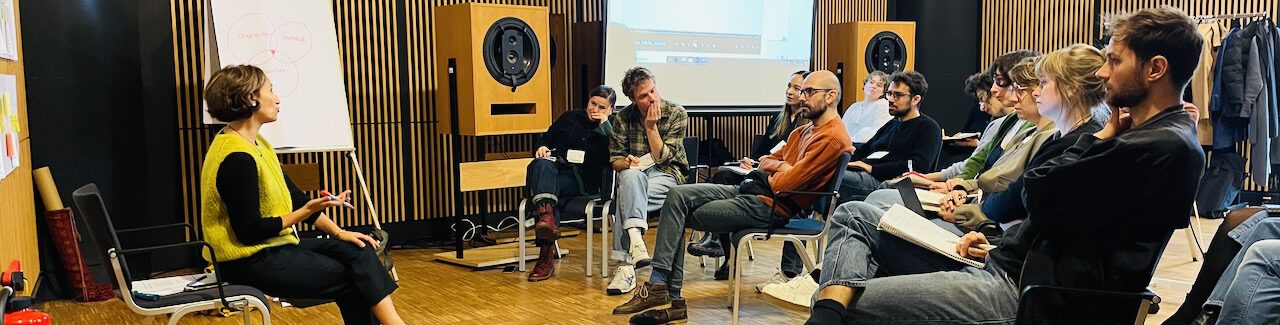
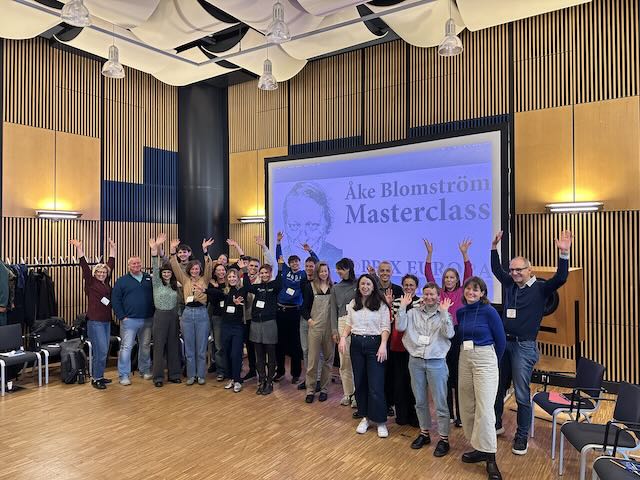
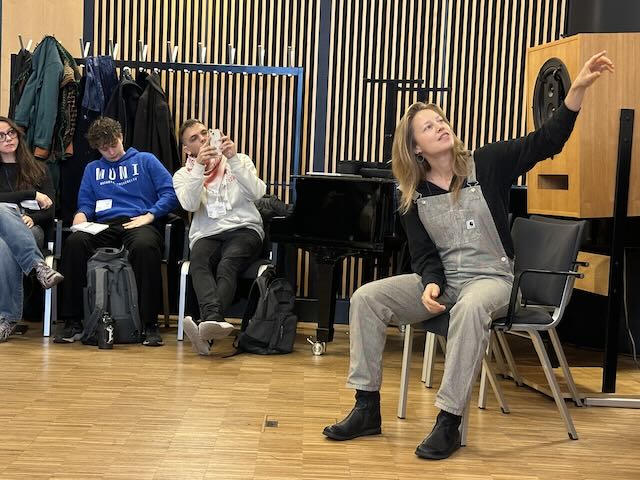
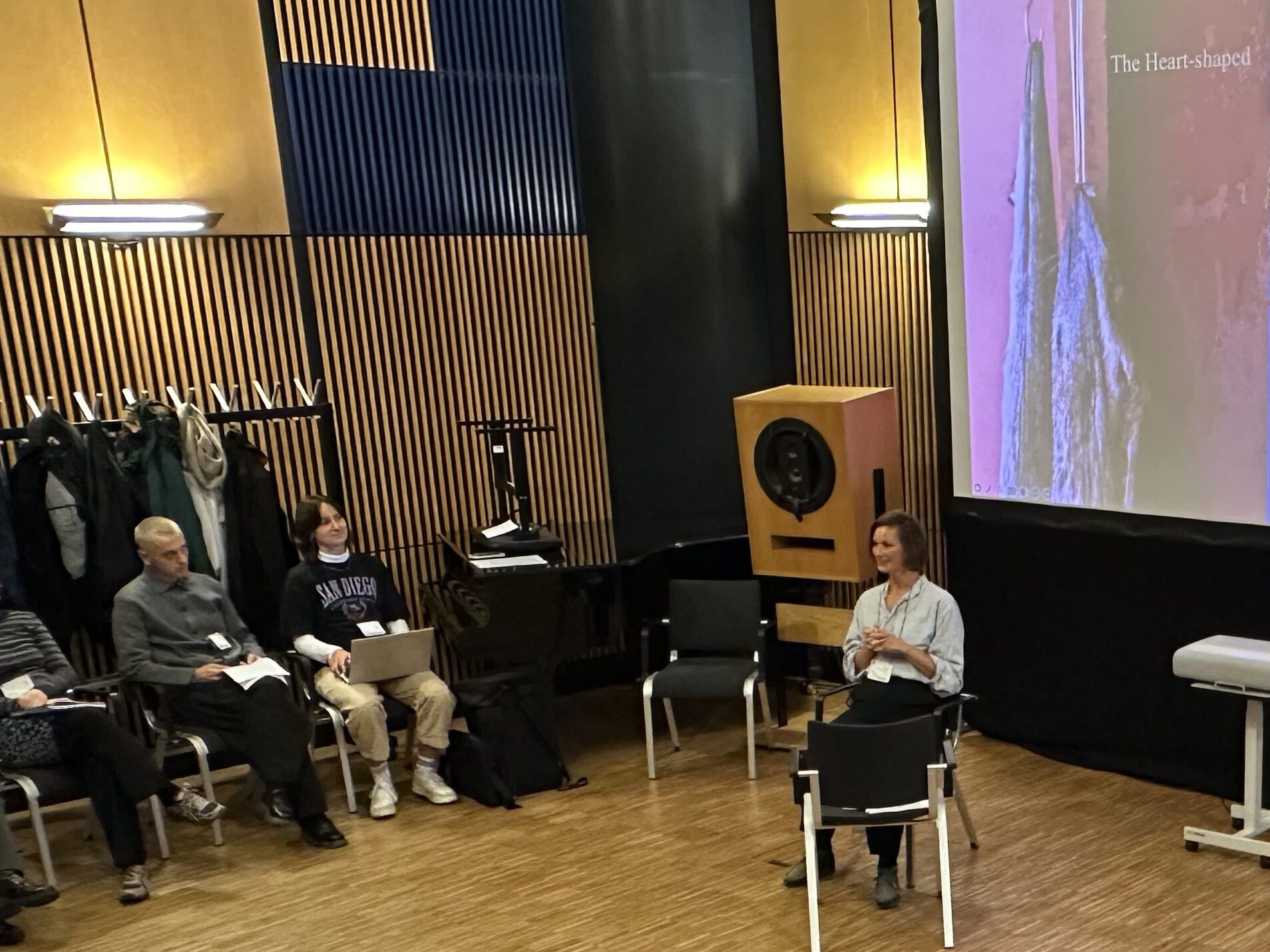
Inside the striking headquarters of Rundfunk Berlin-Brandenburg, we are warmly welcomed by the organisers – Wolfgang Schiller of Deutschlandfunk and Agnieszka Czyżewska-Jacquemet of Polskie Radio Lublin – who introduce us to the speakers: all of them award-winning radio producers from whom we will learn over the coming days. The work they present spans the full breadth of the cultural field of contemporary audio productions – from popular podcast productions that captivate large audiences while addressing pressing social questions, to delicate, artful pieces designed for a contemplative listening audience.
Liam O’Brien introduces Where is Jòn, a compellingly storytelling podcast that has amassed millions of plays. The secret behind the success of this Irish-Icelandic co-production: pace, pace, pace. Wolfgang Schiller tells me that thanks to the popularity of this narrative podcast format, some Deutschlandfunk programmes are now reaching listener numbers unprecedented in the broadcaster’s history. Patrizia Schlosser’s work, which contributes to the investigation and contextualisation of violent crime, is likewise defined by compelling storytelling and a strong sense of audience. We exchange thoughts on narrative technique, and she explains when it is the right moment for a writer to draw on classic dramaturgical frameworks such as the hero’s journey (it is when you have a creative block and need a fresh way into the material).
Patrizia Schlosser
The wide reach of these productions and their appealing acoustic designs are undeniably impressive. Yet I am left with a faint sense of ambivalence: in many of them, the reporter occupies the centre stage, cast almost as a star in their own narrative, guiding the audience step by step through the piece, some may call it “accompanied listening”. Is there not also something slightly narcissistic about placing oneself so prominently at the heart of the story one is telling? We all share a passionate dialogue around these thought-provoking questions.
Nanna Hauge Kristensen
Nanna Hauge Kristensen takes a completely different approach as she presents one of her documentary pieces. Her work is almost entirely free of narrative scaffolding; instead it unfolds through exquisite sound recordings that conjure that oft-invoked “cinema of the mind” within seconds. She describes editing audio as a bodily experience. Everyone in the room understands immediately what she means, the rhythm of a piece as something one must feel, and the immersive experience of being taken to another place through audio documentary. Yet the delicacy of her pieces comes at a cost: such finely captured acoustic nuance demands deep attentiveness from the listener and can easily slip away if concentration falters. For an engaged listener tuning in on a quiet Sunday, these pieces are a delight. Yet for someone zapping through the radio late at night on their way home, they might not be able to reveal their depth.
Inga Janiulytė-Temporin
In between the guests lectures, we participants present our project proposals. The pitches are remarkable across the board: investigative research into social injustices, deeply personal explorations of family histories, and richly textured audio pieces that sweep the listener into immersive sound worlds. Together, we discuss the possibilities and pitfalls within each idea. I myself am wrestling with unwieldy amounts of archival material for a current project about the eventful life of a woman who fought against the Nazi regime (special thanks to Liva Blendstrup, who perfectly complemented my project idea with an advice that fits with striking precision). Everyone in the room – newcomers and seasoned producers alike – contributes generously, offering thoughtful and genuinely useful feedback.
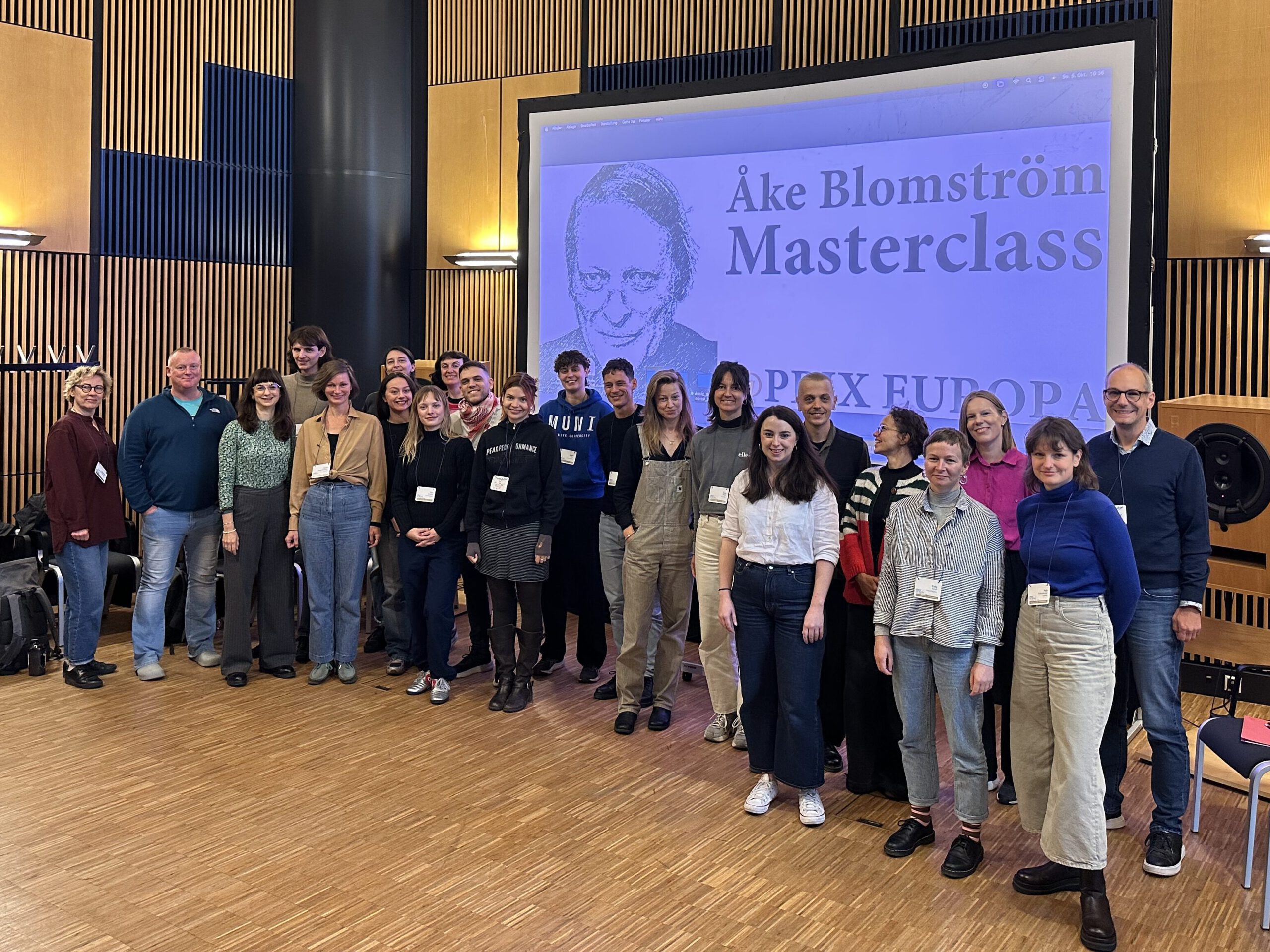
The Åke Blomström Masterclass of 2025 Camilo Genoud (Argentinia), Carlo Hoffmann (Germany), Katie Revell (United Kingdom - Scotland), Kristýna Břeská (Czech Republic), Liva Blendstrup (Denmark), Matúš Ďuraňa (Slovak Republic), Olivia Wimmer (Austria), Tina Priemus (Netherlands), Una Kelly (Ireland), Jakub Pečer (Czech Republic), Pia Rauschenberger (Germany), Ajla Delic (Norway), Shauna McGreevy (Ireland), Nele Dehnenkamp (Germany), Timo Stukenberg (Germany)
At the end of the final workshop day, Inga Janiulytė-Temporin explains how she and her colleague produced the documentary about the Lithuanian couple. I am stunned. She tells us the most work was completed in just two months, and shows a screenshot of her Reaper session: three tracks – music, recorded voices, narration, nothing more. It is precisely this simplicity that makes the piece so astonishingly powerful. Asked about her dramaturgical approach, she simply replies, “we were working very intuitive,” and we are all hanging on her every word.
“Be a reducer, not a producer” is another of the inspiring maxims I absorb in the days that follow, while sitting in on the open jury sessions of the Prix Europa – a phrase borrowed from the music producer Rick Rubin. Together with radio makers from across the continent, we listen to the nominated works, which transport us into the soundscapes of war zones, psychiatric institutions and vanished regimes. After many enriching conversations, sonic discoveries, and inspiring creative insights, I am leaving Berlin; convinced that the craft of radio is a patient, exacting labour of listening, quietly transformative in the way it reshapes how we understand one another.
Grant available for a two-day training event for Europe’s audio talent by Europe’s best audio documentary makers.
Apply now for a scholarship to the Åke Blomström Masterclass delivered at the start of this year’s PRIX EUROPA (4 & 5 October 2025) in Berlin. During the two-day Masterclass you will have the unique opportunity to learn from European award winning documentary makers, to glean their secrets and get their advice.
If you have gathered your first steps in documentary audio, this is your opportunity to pitch your ideas and projects and become part of a network of future feature makers all around Europe. All participants will receive an Åke Blomström Masterclass Certificate.
To be eligible for one of ten scholarships, submit
a 5-minute edited audio production demonstrating the creative use of audio (with English translation as pdf or subtitle video)
a CV,
a covering letter outlining why you wish to attend the Åke Blomström Masterclass
a sketch (max. 1 page) of a documentary project in audio that you might like to pitch there.
The scholarship includes a travel allowance of 500 euros. Please send your application by - new -14 July 2025 to audio@prixeuropa.eu.
On 20 August we will publish the winners here and at PRIX EUROPA website and you’ll find out if your application was successful. Good luck!